
































Cape Verde Held Hostage Until 2039: A Critical Analysis by Antonio Varela
Report on the Economic, Contractual, and Political Accountability Analysis in the Defense of Cape Verde’s National Interests

Following an analysis of the inter-island maritime transport concession contract and the official documents published by the Government of Cape Verde, there are legitimate grounds to question how this contract was negotiated, particularly with regard to exclusivity, financial compensation, competition, and the government’s ability to intervene.
The fundamental error appears to have been granting excessive and long-term commercial protection to a private company responsible for an essential public service, without reserving for the government the flexibility necessary to respond to the country’s evolving transportation needs. In an archipelago like Cape Verde, maritime transport is not merely a commercial activity. It is an essential element for public health, food security, economic development, tourism, citizen mobility, and territorial cohesion.
To understand the scope of this issue, we must go back to February 15, 2019, the date of the original concession contract. At the time, Ulisses Correia e Silva served as Prime Minister, with Olavo Correia as Deputy Prime Minister and Minister of Finance, and José da Silva Gonçalves as Minister of Transportation and Maritime Economy. Subsequently, on April 20, 2023, a contract amendment was signed, at a time when Olavo Correia continued to serve as Deputy Prime Minister and Minister of Finance, while Abraão Vicente held the position of Minister of the Sea. The contract was entered into for a period of twenty years, from 2019 to 2039, with a contractual review scheduled for August 2027. One of the key official documents for this analysis is Resolution No. 32/2023, published in the Official Gazette on April 19, 2023, which approves the draft amendment to the concession contract.
One of the first weaknesses relates to the duration of the concession, as set forth in Clause 3. Twenty years represent a particularly significant commitment for a small, developing island nation whose transportation needs are constantly evolving. A long-term concession may be justified when the private investor makes substantial commitments to invest in infrastructure and the acquisition of new vessels. However, in return, the government should have required strict guarantees regarding investment, modernization, operational efficiency, and the quality of services provided. An alternative would have been to establish an initial five-year concession, renewable upon a satisfactory evaluation of the company’s performance, or a longer-term contract with mandatory evaluations every three years. By committing to a twenty-year term, the government significantly reduced its bargaining power vis-à-vis the concessionaire.
Another particularly concerning provision is Clause 7, regarding the restriction of free competition. Although existing operators have been authorized to remain in the market, the contract imposes restrictions on the granting of licenses to new operators. The potential economic consequences are significant: reduced competitive pressure to improve services, fewer alternatives available in the event of vessel breakdowns, greater dependence of the State on a single company, creation of barriers to private investment in the maritime sector, reduced bargaining power of the State, and limited business opportunities for Cape Verdeans themselves. Furthermore, Clause 21 provides for mechanisms to restore financial balance under certain circumstances in which competition affects the concessionaire’s operations. The government should have protected and encouraged competition, rather than granting the concessionaire such comprehensive commercial protection.
In the financial section, the 2023 contract amendment established an annual reference amount for financial compensation of approximately 6.6 million euros, according to information released by the Ministry of Finance. This amount corresponds to about 550,000 euros per month, approximately 60.7 million Cape Verdean escudos, or 727.8 million escudos per year. Projecting this reference amount, we would have 33 million euros over five years, equivalent to approximately 3.64 billion escudos; 66 million euros over ten years, corresponding to 7.28 billion escudos; and 132 million euros over twenty years, approximately 14.55 billion Cape Verdean escudos. It is important to clarify that these figures are illustrative projections, based on the assumption that the annual reference amount remains constant, without accounting for inflation, contractual adjustments, or additional compensation. They do not represent the amount actually paid since 2019.
Public subsidies are not necessarily wrong. Some routes, especially those serving the less populated islands, struggle to ensure commercial profitability. The mistake lies in subsidizing an activity without sufficiently linking financial compensation to concrete and measurable results. The government should prioritize payment for services actually rendered, rather than simply for maintaining a concession.
Clause 26, regarding financial penalties, also deserves special attention. The revised contract establishes an annual cumulative limit for contractual penalties corresponding to 2% of the previous year’s regulated revenues. It also provides for exemptions related to vessel breakdowns and certain operational limitations. These conditions may reduce the incentives for the concessionaire to maintain reserve vessels and ensure adequate preventive maintenance. Mechanical breakdowns are understandable. However, repeated breakdowns—when resulting from inadequate maintenance or poor operational planning—should not become a problem borne exclusively by the population.
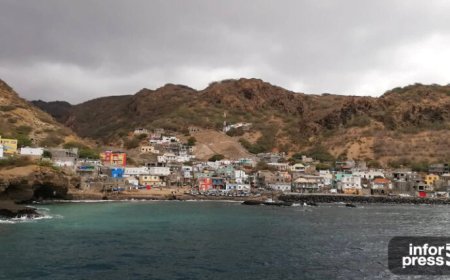
For the residents of Brava, for example, the cancellation of a trip is not merely an inconvenience. It can mean missing a doctor’s appointment, being unable to transport a patient, shortages of medicine and food, losses for merchants and farmers, or even the prolonged isolation of the population. No Cape Verdean community should be subjected to these circumstances without adequate alternatives.
Another issue of enormous importance is the cost of reclaiming the concession, as provided for in Clause 29. This may be one of the most financially dangerous provisions in the entire contract. After eight years, the State may repurchase the concession for reasons of public interest, subject to at least one year’s prior notice. However, the compensation payable to the concessionaire is based on independent assessments of projected future cash flows for the remainder of the contract period. In other words, Cape Verde may be required to compensate the company based on the expected economic value of an activity it would no longer carry out. This condition constitutes a potential financial obstacle to the State’s regaining control of maritime transport. It is legitimate to ask why exit conditions more favorable to the public interest were not negotiated.
The controversy surrounding the ships Djabraba and Eugénio Tavares adds a new dimension to this discussion. On November 26, 2026, CV Interilhas publicly argued that the two new ships acquired by the government should be integrated into the concession, citing the 2023 contract amendment. That amendment provides for the introduction of new vessels and the corresponding financial and operational adjustments. This situation raises a fundamental question: how can it be justified that Cape Verdean taxpayers finance the acquisition of new vessels, while the government may face contractual limitations on its freedom to decide who should operate them? The government should have expressly reserved the right to use the vessels acquired with public funds wherever they are needed, including through other operators, especially on islands with the greatest difficulties in maritime connectivity.
In general terms, the clauses that warrant particular challenge and review are the 3rd, concerning the duration of the concession; the 7th, concerning exclusivity and restrictions on competition; the 20th, concerning financial compensation and the exposure of public finances; the 21st, regarding financial equilibrium and potential indemnities resulting from government decisions; the 26th, concerning penalties and limited financial consequences in the event of non-compliance; the 29th, regarding the buyout of the concession and the potentially high costs of regaining control; and the 8th of the 2023 amendment, concerning new vessels and the limitations and uncertainties regarding operational control.
The discussion on the future of Cape Verdean maritime transport must also take into account the historical experience of the former state-owned company Arca Verde. In the difficult years following national independence, Cape Verde had far fewer financial and technological resources than it does today. Arca Verde played an important role in connecting the islands, transporting passengers and goods, and consolidating national unity. It is legitimate to question how a country that currently has more financial resources, better technologies, and greater demand continues to face such significant difficulties in maritime mobility. However, a rigorous comparison between Arca Verde and CV Interilhas requires historical data on the regularity of trips, operating costs, public subsidies, safety, transport capacity, and cancellation rates. We must not confuse historical memory with an objective assessment of the two companies’ performance.
But is Cape Verde really doomed to remain bound by this contract until 2039? Not necessarily. Clause 28 provides for mechanisms for temporary state intervention, while Clause 30 allows for the termination of the contract under certain circumstances of serious breach attributable to the concessionaire. There is a fundamental legal distinction between terminating a concession for reasons of public interest and terminating a contract due to a serious breach of the obligations assumed by the concessionaire. The financial and legal consequences of these two situations could be substantially different. The government should commission an independent legal, financial, and operational audit to determine whether there are sufficient grounds for terminating the contract.
It is also important to recall that, on November 5, 2025, the National Assembly formally established a parliamentary commission of inquiry into the maritime transport concession. The findings of this inquiry should help clarify responsibilities and identify the legal mechanisms available to safeguard national interests.
The dispute over the multimillion-euro compensation claims is another factor that cannot be ignored. According to information released by the government itself, CV Interilhas initiated arbitration proceedings in 2024, claiming approximately 16 million euros, equivalent to about 1.76 billion Cape Verdean escudos. Subsequent reports indicated that the arbitral tribunal ruled in favor of the concessionaire on various contractual matters, including issues related to exclusivity. The State subsequently sought to have the arbitral award set aside by the Supreme Court of Justice. This situation demonstrates that the financial risks associated with the contract are not merely theoretical.
However, it would be incorrect to assert that all claims for compensation result exclusively from mismanagement by the concessionaire. Some relate to alleged breaches of contract by the State itself. This is precisely why the quality of the initial negotiations should be the subject of a thorough investigation.
If the fundamental objective had been to ensure the quality, sustainability, and sovereignty of national maritime transport, the contract should have included conditions more favorable to the protection of the public interest. First, regional concessions could have been established, dividing operations between the Barlavento and Sotavento island groups, thereby reducing dependence on a single company. Second, public ownership of strategic vessels should have been safeguarded, ensuring that the State retains ownership of ships deemed essential and retains the freedom to replace their respective operators.
Third, subsidies should be directly linked to performance, making public payments contingent on the number of trips made, punctuality, safety, and the quality of service provided. Fourth, minimum service guarantees should have been established, ensuring mandatory service frequencies to the most vulnerable islands, namely Brava, Maio, and São Nicolau. Fifth, there should be mandatory backup vessels, preventing a single breakdown from causing the prolonged isolation of an island.
Financial transparency should also be a core requirement, achieved through annual independent audits, with the publication of the results and the compensation paid by the government. At the same time, healthy competition should be promoted by allowing public tenders for specific routes and complementary services, thereby encouraging the participation of Cape Verdean entrepreneurs. The contract should also include more effective termination clauses, ensuring that the government has mechanisms to replace operators that fail to fulfill their obligations, without disproportionate compensation. It would also be essential to establish guarantees for emergency transportation of patients, medications, and essential goods, as well as periodic contractual reviews every three years, adapting the economic and operational conditions to the country’s actual needs.
Given this scenario, Ulisses Correia e Silva, Olavo Correia, José da Silva Gonçalves, and Abraão Vicente should be called upon to provide public clarification regarding their respective roles in the negotiation, approval, and revision of this contract. The Cape Verdean people have the right to know which economic studies justified a twenty-year concession, what specific investments were required of the concessionaire, and who provided legal counsel to the government during the negotiations. It is equally legitimate to ask why restrictions on the entry of new operators were accepted, whether the financial risks of the indemnification clauses were properly assessed, and what mechanisms were established to ensure the mobility of populations on the most vulnerable islands.
It is also important to clarify why the freedom to use the vessels acquired by the government was not expressly safeguarded and, above all, who bears political responsibility for the consequences of these decisions. There is no need to resort to personal insults, racial accusations, or regional divisions to demand accountability. The contractual terms themselves provide sufficient grounds to question the negotiating competence, strategic vision, and ability to defend national interests.
The greatest strategic error committed in the concession of inter-island maritime transport was not necessarily entrusting its operation to a private company, but rather doing so without sufficiently safeguarding the economic, social, and strategic interests of the Cape Verdean nation. It is difficult to understand how an archipelagic state could agree to compromise, for twenty years, one of the sectors most critical to its economic survival and territorial unity, through restrictions on competition, compensation mechanisms worth millions, limited penalties, and potentially onerous buyback conditions.
The people of Brava, Maio, São Nicolau, and the other islands cannot continue to bear the consequences of political and contractual decisions that have failed to adequately safeguard their interests. Cape Verde needs to regain its capacity for strategic decision-making, promote competition, encourage domestic investment, and ensure that public resources are used primarily for the benefit of its citizens.
The government must commission an independent audit of the entire concession dating back to 2019, investigate any potential breaches, clarify political responsibilities, and use all available legal mechanisms to protect the national interest.
This analysis is based on the officially published contract amendment and publicly available information. A definitive legal conclusion requires a comprehensive analysis of the signed contract, its annexes, the arbitral awards, internal negotiation documents, and the findings of the parliamentary inquiry. There is insufficient evidence in this analysis to establish criminal liability or deliberate intent to harm the State.
Cape Verde does not exist to guarantee a company’s profitability. The concessionaire is the one that must exist to serve Cape Verde.
No contract, no business interest, and no political commitment should take precedence over national sovereignty, the country’s economic interests, and the dignity of the Cape Verdean people.